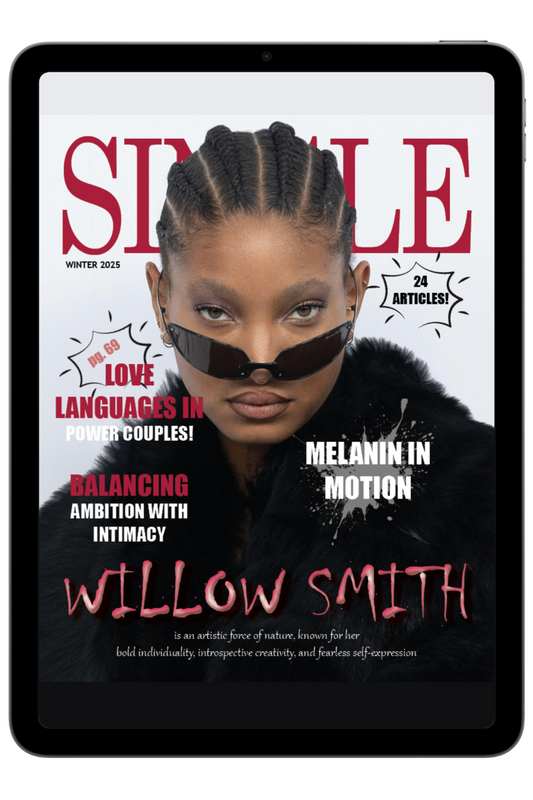


How to Dress Classy: The Siren Wardrobe

Ever heard of enclothed cognition? It refers to the idea that what you wear can influence how your brain functions, affecting attention, confidence, emotional regulation, and behavior before anyone else even reacts to you. For example, people who wear tailored clothing such as jackets or suits are often perceived as abstract thinkers who carry authority and demonstrate persistence in their tasks.
On the other hand, those who gravitate toward loose, soft, or worn fabrics often convey emotional openness, relaxation, and vulnerability. A clear illustration of this contrast appears in the show Grace and Frankie. The two women have vastly different personalities and are forced to coexist when their husbands leave them to marry one another. Frankie’s character embodies a relaxed, free-spirited energy, while Grace, portrayed by Jane Fonda, is far more rigid and controlled. One exudes siren energy, while the other reflects a go-with-the-flow disposition.
Related articles: Dating a Rich Man When You're Poor
Men often seek women who present themselves as down-to-earth, easygoing, and low maintenance, especially when they are not yet where they want to be financially or socially. However, as those circumstances change, many begin to seek out their siren. This is the woman who dresses with intention, choosing tailored pieces that highlight her figure and reflect self-respect. She takes pride in her appearance, and as a result, those around her tend to respond in ways that align with how she presents herself.
Our brains naturally assign social meaning to sensory input such as fabric, weight, and fit. Because the skin is our largest organ, clothing continuously stimulates it. Natural fibers like cotton, wool, linen, and silk allow for better temperature regulation, reduce low-level stress, and create grounding sensations. Synthetic fibers such as polyester, acrylic, and nylon tend to trap heat, increase discomfort over time, and contribute to irritability and fatigue while reducing bodily awareness. If you doubt that clothing can influence mood, it may be time to reconsider. Natural fibers often enhance feminine energy and promote calm, whereas cheap synthetic fabrics can contribute to negative emotions and diminished self-perception.
Related articles: Smart Money Moves Every Single Woman in Her 30s and 40s Should Know

Clothing signals identity. The brain constantly asks, “Who am I right now?” and what you wear helps answer that question with every movement. Consider the difference: clothing associated with professionalism encourages professional behavior; leisurewear can reduce cognitive discipline; clothing tied to past versions of yourself may reinforce emotional stagnation. In the opening of Late Bloomer by Lisa K. Stepheson, we meet Noel as she sifts through her wardrobe and realizes that nearly everything reflects adolescence, despite her being twenty-six years old. Pink pajamas and Hello Kitty underwear become symbols of her emotional inertia. As she leaves her family home for New York City and begins to evolve her style, we witness her transformation from a timid young adult into a confident woman coming into her own.
The Siren Wardrobe aligns closely with a classic, elevated style. People often feel stuck when they continue dressing as they did during their broke era, college years, or periods of trauma. To move beyond this, it is important to ask yourself, “What do I want my clothes to say about me?” Sirens are not easily approachable, as they tend to drape themselves in garments that deliberately trigger social perception. For example: black signals authority, protection, and emotional distance; white conveys clarity, openness, and vulnerability; red represents dominance, attraction, and intensity; muted tones suggest safety and blending in; and blue communicates trust, calm, and competence. What you wear influences the type of people you attract and how they treat you once interest is reciprocated.
Related articles: What Is Stealth Wealth Fashion?
Self-respect is reflected in how you choose to present yourself, as your appearance tells the world how you expect to be treated without ever saying a word.
By now, we have all heard that many men are less likely to approach women who are dressed up. These women are often perceived as intimidating, and fear of rejection plays a role. In contrast, a woman dressed down in baggy pants, an oversized sweater, sneakers, and her hair in a bun may receive numerous catcalls in a single day, leaving her to wonder why.
The more confident a woman appears, the less likely a man who is not interested in a serious relationship is to risk rejection. As a result, he may choose not to approach at all. Clothing communicates status, reliability, authority, approachability, emotional availability, and creativity. A man operating primarily from his feminine energy, or one seeking only a casual connection, is unlikely to approach a woman wearing an all-black tailored suit.
Celebrity couples offer clear examples of how shared style can reflect alignment. Marjorie and Steve Harvey, Michelle and Barack Obama, and Hilarie Burton and Jeffrey Dean Morgan consistently appear sophisticated, cohesive, and polished, displaying a sense of psychological order through their appearance. When a woman is dressed with intention and her partner fails to acknowledge or compliment her, it often signals underlying tension within the relationship.
Related articles: How the 'Soft Life' Trend Is Shaping Dating Expectations

Hailey and Justin Bieber, Kim Kardashian and Kanye West before their divorce, and Kylie Jenner and Travis Scott illustrate this dynamic. Kylie, in particular, demonstrates a visible siren evolution. During her relationship with Travis Scott, her style leaned toward more fitted, revealing, and less conservative looks. In contrast, her relationship with Timothée Chalamet appears to have influenced a softer, more intentional aesthetic. She now favors flowing silhouettes, and the two often coordinate their looks when appearing together on red carpets.
The Siren Wardrobe is about restoring agency within yourself. It is not about vanity. Self-respect is reflected in how you choose to present yourself, as your appearance tells the world how you expect to be treated without ever saying a word. This idea is no different from the ongoing conversation around airport attire. Women arriving in bonnets and pajamas has become a trend that has drawn increasing criticism from the press and from bystanders who view it as a display of psychological misconduct. Clothing functions as sensory regulation, identity reinforcement, emotional boundary-setting, cognitive priming, and more. What you wear communicates how you value yourself and how you expect others to treat you.
Related articles: How To Attract A Rich Man and Keep Him
Additionally, when your clothing is expensive or your accessories cost over $1,000, you are far less likely to engage in arguments or risky behavior that could jeopardize your health or your belongings. You take pride in what you work hard for and are less willing to allow those items to become collateral damage in any situation where conflict could arise.
Sirens have something to lose. Their outfits are often the first thing people notice when they enter a room, and that initial impression influences how others treat them, compliment them, and approach them. You do not want to be seen as an easy hookup simply because you chose to wear pajamas while running errands. You want to be the unattainable woman, the one a man thinks twice before approaching because he understands that earning your attention carries social value and consequence.
by Samara Morris