

How Historical Black Women Modeled Autonomy Long Before It Had a Name

Nicki Minaj is publicly aligning herself with MAGA. Sexyy Red is questioning why parts of the Black community refer to her as being connected to the CIA. Meanwhile, the world feels like it is on fire following the release of more than three million Epstein files. Black History Month in 2026 feels different because power is no longer framed through visibility, representation, or firsts. Instead, it is being reframed through agency, refusal, autonomy, and self-definition, values embodied by Black women long before the language existed.
Following the 2024 election, in which 92 percent of Black women voted for presidential candidate Kamala Harris, many have begun to care less about seeking recognition and more about examining who has always held power, even when it was denied to them. Rapper Nicki Minaj has sparked controversy through her vocal support of sitting president Donald J. Trump and the Republican administration. This has led many to ask an important question: is it time to reassess success outside of traditional institutions?
Related articles: Unveiling the Erosion of the Black Woman's Image: Examining Music Industry Influence

Traditional institutions tell us who to listen to, what movies to watch, and which public figures to like, follow, and engage with. These are the people we are led to believe share our values, beliefs, or in some cases, our trauma. However, the release of the Epstein files revealed that many of the individuals we are encouraged to support are the very criminals we would condemn if they lived next door or were members of our own families. There is a growing cultural fatigue with surface-level representation, and this moment has only scratched the surface.
As more Black women seek to reclaim their autonomy, they are turning toward historical Black women for guidance. Interest in this topic has surged, with “historical Black women” ranking among the top ten most explored topics on Google as of February 1. These women are no longer viewed as symbols of power, but as architects of it. The concept of symbolism, as it relates to success and power in America today, has become increasingly corrupted, disingenuous, and in many ways, repulsive.
Related articles: Mary J. Blige's Strength of a Woman Festival and Summit: Empowering Women and Elevating Voices

What is now at the forefront of our cultural conversation are architects of alternative power. Who were the system navigators, the strategists, and the women who went against the tide and emerged stronger? These women did not rely on institutions designed to exploit those who sought their aid, nor were they weaponized against the communities they once hoped to represent.
Harriet Tubman’s power came through refusal. It was not merely escape, but strategic extraction. Her relevance today lies in what she represents: one of the earliest examples of opting out of unjust systems rather than asking them to change.
Sojourner Truth’s power lay in narrative control. She publicly dismantled gender and racial assumptions and understood that power often begins with who gets to define reality. Madam C. J. Walker ’s power came through economic independence. Her legacy resonates in an era where wealth is increasingly tied to autonomy rather than status. Ida B. Wells’s power was rooted in truth without protection. She investigated lynching despite immense personal risk, and her work mirrors today’s distrust in institutions and the continued rise of independent journalism, both of which remain deeply relevant in 2026.
Related articles: Black Women Retract Condolences for James Earl Jones Following Controversial Video Release

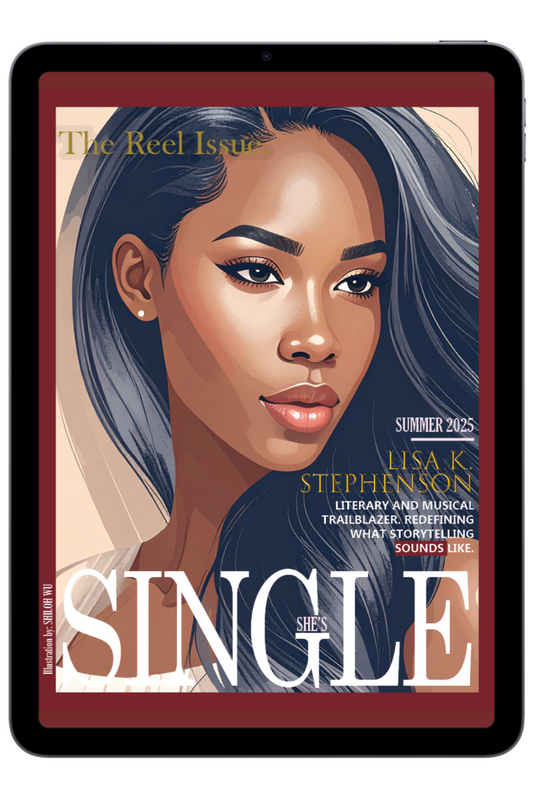
“I love this topic of exploring historical Black women because so many of them are truly the inspiration behind my journey to retain autonomy through creative ownership,” says literary trailblazer Lisa K. Stephenson. “I remember when my agent pitched my novels to publishing houses in New York City and they turned us down, not because the work wasn’t good, but because they claimed there wasn’t an audience for the stories I was writing. Urban erotica has its place in the African American literary community, but by the early 2020s, fewer Black women were seeking novels centered solely on sex and trauma. However, science fiction and fantasy written by and for Black women were not considered marketable either.”
Stephenson continued, “I had to work incredibly hard and spend an exorbitant amount of money just to get a hundred eyes on my work because it didn’t align with what mainstream media wanted to push to the Black community. It wasn’t about drugs, rape, trauma, or the oversexualization of Black women. It was about positivity, fun, healthy romance, fantasy, and bold storytelling inspired by anime culture. That didn’t fit their narrative, until recently.”
“So as a Black woman, my goal then and now is to prove there is a place for these stories. The Black community will support positivity when it is presented with quality. That is why I take my time, why I work as hard as I do, and why I am meticulous in my craft. Representation and ownership matter deeply to our culture, and I intend to be one of the women the African American community can look back on and say, ‘Yes, she made a difference. She represented us with class, dignity, creativity, and moral disruption.’”
Related articles: What Is a PR Relationship: 'The Artist' by Lisa K. Stephenson Book Review
Other historical figures, such as Fannie Lou Hamer, influenced today’s demand for authenticity over decorum. Zora Neale Hurston demonstrated power through cultural preservation, anticipating modern resistance to performative storytelling. In alignment with this legacy, Stephenson’s novel Late Bloomer has been formally acquired by the Schomburg Center for Research in Black Culture at the New York Public Library, securing its place in a permanent research collection. This marks the beginning of documenting and preserving her cultural legacy.
The renewed interest in historical Black women reflects a broader cultural reckoning. People are no longer asking who was allowed to succeed. They are asking who succeeded anyway. It has become evident that those who were permitted access to power were often positioned there for purposes far more insidious than many could have imagined. The impact of that manipulation has embedded itself deeply within the community, making the path forward feel almost impossible at times.
Yet as more Black women model autonomy in 2026, we will begin to see the slow disappearance of the raunchy, classless, and oversexualized portrayals of Black women in mainstream media. In their place, there will be a resurgence of talented, intellectually grounded Black women who reflect the majority and finally receive the visibility, respect, and support they have always deserved.
by Riley Cook
Image Credit: Halle Berry in Their Eyes Were Watching God (2005)
Octavia Spencer in Self Made: Inspired by the Life of Madam C.J. Walker (2020)
Medium